
SEP equips institutions to adopt evidence-based practices that improve academic outcomes by transforming student experience.
 Ascend
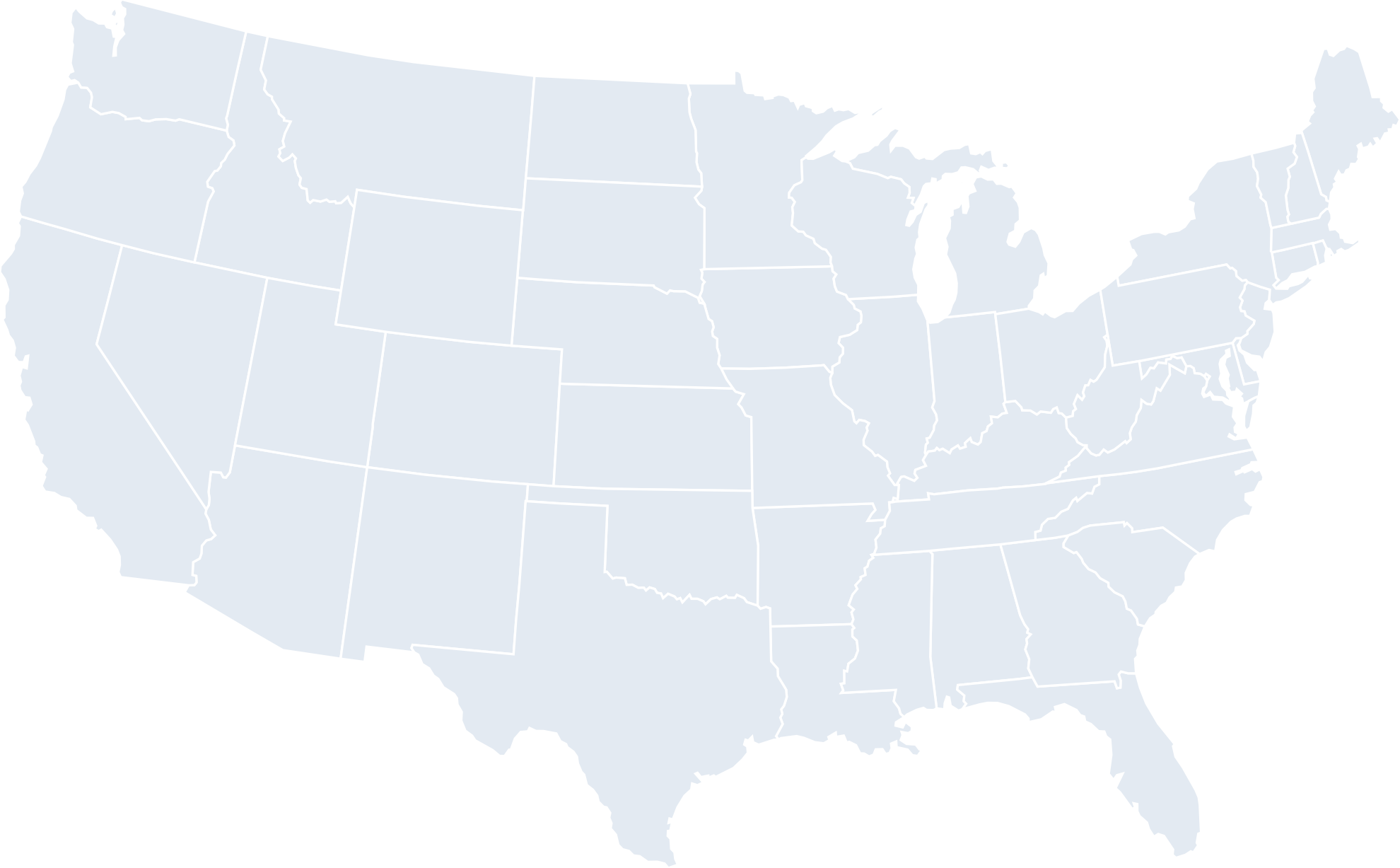
106 institutions across 34 states, plus Guam and Puerto Rico, 2019‑20 through 2026‑27. Alaska, Guam and Puerto Rico are counted but fall outside the map.

Ascend · How It Works
Ascend is a data-driven professional learning program. It gives college instructors a clear picture of how their own students are experiencing their course — early enough in the term that they can still do something about it.
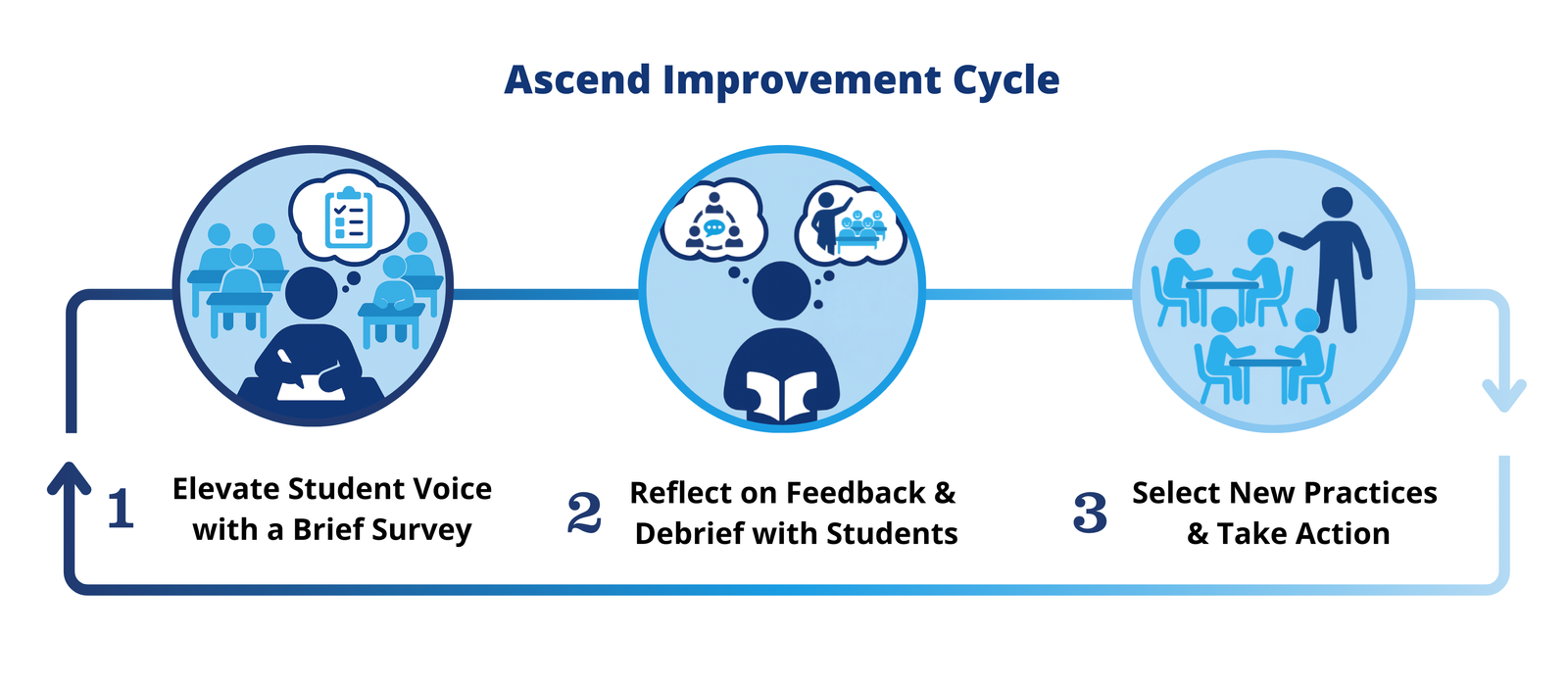
The whole ask is about seven to eight hours a semester. Sixty minutes for the demo, half an hour of setup, then roughly two hours per cycle — three to four cycles across a term. Students answer in five to ten minutes, and the report comes back within days, disaggregated, so gaps inside a single classroom become visible while there is still time to act on them.
The Measures
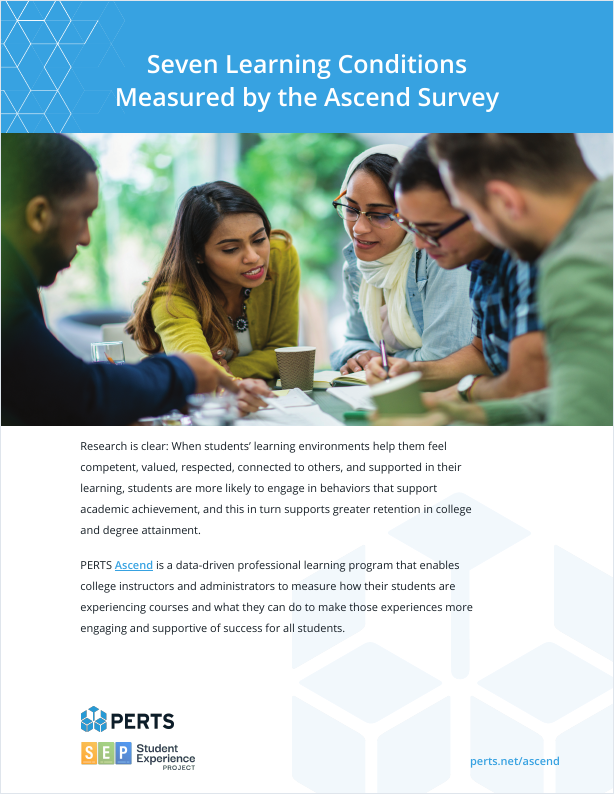 Seven Learning Conditions Measured
Students are not asked to rate their instructor. They are asked about their own experience of the class — whether they feel they belong, whether they are treated with respect, whether their instructor seems to believe they can grow.
Change in these conditions predicts change in D, F and W rates. As students' experience of a course improved over a term, their likelihood of earning a D or an F, or withdrawing, fell — and their likelihood of an A or B rose. Read the SEP report.
Evidence
percentage points
higher one-year retention
At California State University Fullerton, students in Ascend sections were 19% more likely — twelve percentage points — to be retained a year later than matched controls.
Matched case-control: 1,426 students in 713 matched pairs, matched on gender, ethnicity, first-generation status, Pell status, campus GPA and high school GPA. Analysis by the CSU Fullerton Office of Institutional Research with Professor Ioakim Boutakidis.
In 2023, two institutions had institution-level outcome findings. Today sixteen are building them — five University of Texas System campuses under one shared protocol, and eleven more designing their own analyses in their own contexts.
Final reports from the Ascend Evaluation Working Group are expected in 2027.
Across the first SEP cohort — six universities, 295 faculty, roughly 10,000 students a term — D, F and W rates fell 26% in fall 2020 and 18% in spring 2021 against the same instructors teaching the same courses in prior terms.
Students who reported positive experiences by the end of the term were more likely to earn an A or B in a STEM course: 28% more likely for women, 29% for Black, Latinx, Native American and Pacific Islander students, and 30% for first-generation students.
Voices
It was nice to know that our voices were being heard even if we weren’t raising our hand and saying it out loud. You can say it anonymously and still get your point across.
I’ve been wanting to look at student experience gaps in my classes for quite some time, but I didn’t really know where to start — so I really like that they held my hand through this entire process and made it easy for me.
Get in Touch
We are at capacity for the 2026‑27 academic year. If you would like to talk about what is possible at your institution for 2027‑28, tell us a little about your context and we will be in touch in the coming months.